








Incorporating local plants into your home decor not only brings a touch of nature indoors but also supports local ecosystems. The right choice of plants can transform any space, enhancing its beauty while promoting sustainability. These plants can improve air quality and create a calming environment. This guide will help you choose the best local plants to enrich your home decor and provide you with practical tips for their care and arrangement.
- Local plants improve air quality and aesthetics.
- Choose plants that thrive in your local climate for easy care.
- Incorporate plants into various decor styles for a personalized touch.
Table of Contents
Identifying Local Plant Varieties
Understanding which plants are native to your area is the first step in creating a beautiful indoor garden. Local plants are adapted to your climate and soil conditions, making them easier to care for. They often require less water and are more resilient to pests. Start by researching local flora through gardening clubs, local nurseries, or even community botanical gardens. Many regions have resources available that provide information about native plants that could thrive in your home.
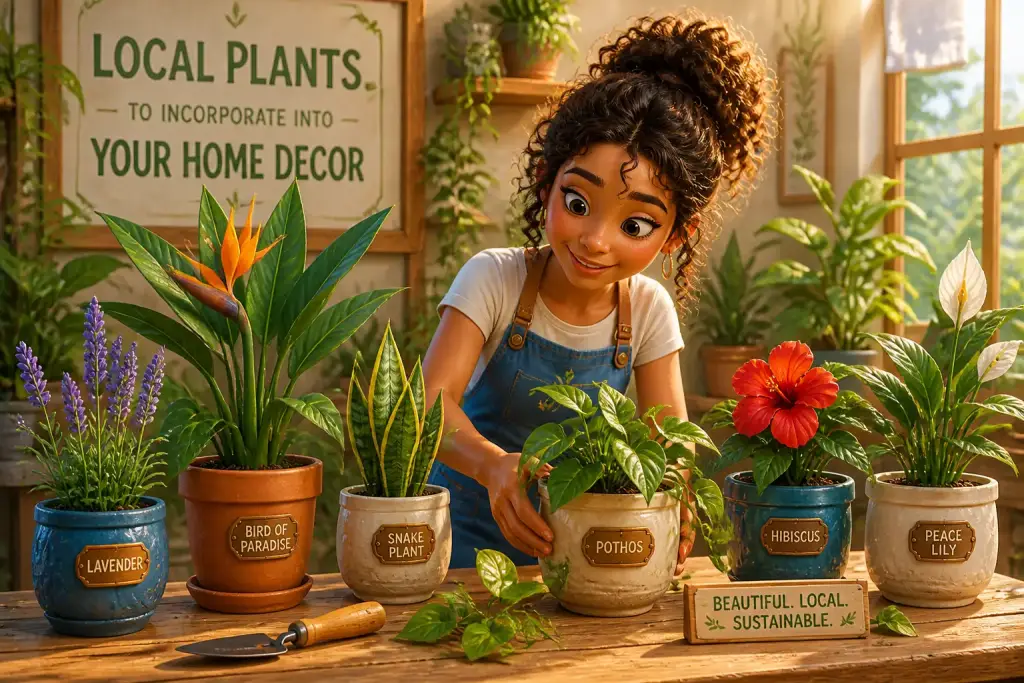
Consider popular local plants that many people use in their decor. For example, in many areas, plants like the snake plant, pothos, and various ferns are common. These plants not only look beautiful but are also known for their air-purifying abilities. To make your selection easier, here are a few steps to identify the best plants:
- Check local gardening centers for native plant options.
- Join online forums or local gardening groups to get recommendations.
- Visit parks or natural reserves to see what grows well in your area.
Examples of Local Plants
Here are some examples of local plants you might consider incorporating into your home decor:
- Snake Plant: Known for its resilience and ability to thrive in low light.
- Pothos: A trailing vine that adds greenery while being very forgiving for beginners.
- Spider Plant: Great for hanging baskets and very easy to care for.
- Ferns: Perfect for adding texture and can thrive in humid spaces like bathrooms.
Benefits of Using Local Plants
Using local plants in your home decor offers numerous benefits. One significant advantage is the positive impact on the environment. Native plants help support local wildlife, such as birds and beneficial insects. When you incorporate these plants into your decor, you contribute to the preservation of local ecosystems. Additionally, local plants generally require less maintenance than exotic varieties, making them an ideal choice for busy individuals.
Another benefit is the aesthetic appeal that local plants can bring to your home. Their natural appearance can create a more grounded and organic feel in your space. By adding plants that are native to your area, you create a sense of connection to the local landscape. This can be especially fulfilling if you choose plants that remind you of your favorite outdoor spots or childhood memories.
Health Benefits
Local plants are not just about beauty; they also contribute to a healthier indoor environment. Some of the health benefits include:
- Improved Air Quality: Many local plants can filter toxins from the air, making your home healthier.
- Stress Reduction: Being around plants can help reduce stress and increase feelings of well-being.
- Increased Humidity: Plants release moisture into the air, which can improve humidity levels and reduce respiratory issues.
Arranging Local Plants in Your Home
Once you have selected your local plants, the next step is arranging them in your home. The way you display plants can significantly affect the overall look of your decor. Begin by considering the lighting in each room. Some plants thrive in bright, direct light, while others prefer indirect light or shade. Place your plants in areas where they can flourish based on their specific needs.
Think about varying the heights and sizes of your plants to create visual interest. For instance, tall plants like the snake plant can be placed in corners or next to furniture to draw the eye upward. Smaller plants can be grouped on shelves or tables to create a cozy feel. Here are some tips for arranging plants effectively:
- Use plant stands or pedestals to elevate some plants and create layers.
- Group plants of varying heights together for visual balance.
- Mix and match pots to add personality and character.
Creating Focal Points
Consider using your plants to create focal points in your home. For example, a large potted plant can serve as a stunning centerpiece for a dining table or living area. Alternatively, you can create a green wall by arranging hanging plants or wall-mounted planters. This not only saves space but also adds a unique touch to your decor.
Care and Maintenance of Local Plants
Taking care of your local plants is essential to keeping them healthy and vibrant. Proper care can extend the lifespan of your plants and ensure they look their best. Start by understanding the specific needs of each plant. Most local plants will require regular watering, but the frequency can vary. For example, succulents typically need less water than ferns. Always check the soil moisture before watering, as overwatering can be harmful.
Another critical aspect of plant care is ensuring they receive adequate light. If a plant is not getting enough light, it may become leggy or lose leaves. Consider rotating your plants regularly to ensure they grow evenly. Additionally, pay attention to pests and diseases that can affect your plants. Regularly inspect the leaves and soil for any signs of trouble. Here are some basic maintenance tips:
- Water thoroughly but infrequently to avoid root rot.
- Fertilize during the growing season for optimal growth.
- Prune dead leaves and stems to promote healthy growth.
Seasonal Care Tips
Adjusting your care routine with the seasons can also benefit your plants. In winter, many plants require less water as they enter a dormant phase. In contrast, spring and summer often see increased growth and may require more frequent watering and fertilization. Be mindful of temperature changes and drafts that can stress your plants.
Incorporating Local Plants into Different Decor Styles
The beauty of local plants is their versatility. They can complement various interior design styles, from modern to rustic. If your home features a minimalist design, consider using a few striking plants in simple pots to maintain a clean aesthetic. On the other hand, if your style is more eclectic, mix various plants and pots to create a vibrant display.
In a rustic decor setting, wooden planters or terracotta pots can enhance the natural feel. Adding plants like ferns or ivy can create a cozy atmosphere. For a contemporary look, sleek ceramic pots or geometric planters can provide a striking contrast to lush greenery. Here are some tips for matching local plants with decor styles:
- Modern: Use simple, clean lines in pots and pair with plants that have structured shapes.
- Bohemian: Mix various plants with colorful pots and textiles for a relaxed, inviting feel.
- Traditional: Choose classic plants like peace lilies or rubber plants in ornate pots.
Examples of Plant Pairings
Pairing plants with specific decor styles can elevate your space. For instance, a snake plant in a simple white pot looks stunning in a modern kitchen. Meanwhile, a cascading pothos in a macrame hanger can add a bohemian touch to a living room. Consider your overall color scheme and furniture choices when selecting plants to ensure they complement your space.
Select plants that are native to your area to ensure they grow well and require less maintenance.
Putting Creating a Green Sanctuary at Home Into Daily Practice
Incorporating local plants into your home decor can create a beautiful, inviting, and sustainable environment. By selecting native plants, you support local ecosystems while enhancing your living space. Remember to pay attention to their care needs and arrange them thoughtfully to make the most of their beauty. With a bit of creativity, your home can become a green sanctuary that brings joy and tranquility to your daily life.
To further personalize your space, consider integrating local resources and vintage furniture for a truly unique decor experience. Check out our article on where to find vintage furniture to add character to your home. Additionally, explore creating sustainable decor with local materials to enhance your home’s charm.