









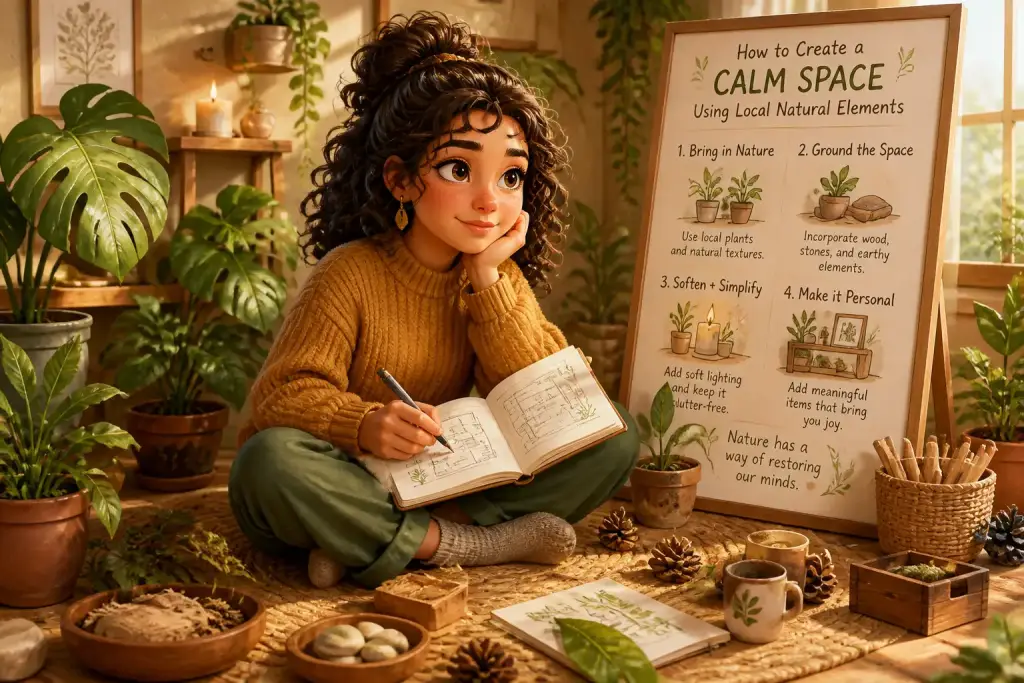
Creating a calm space in your home can significantly enhance your well-being. The process involves integrating local natural elements that soothe the mind and body. Using materials and plants from your area not only promotes a sense of connection to your environment but also brings a unique, personal touch to your living space. This approach fosters tranquility and can transform any room into a serene oasis. The following sections will provide a detailed guide to help you successfully create your calm space.
- Use local plants for a natural touch and improved air quality.
- Incorporate natural materials like wood and stone for grounding energy.
- Choose a color palette inspired by local landscapes for a soothing atmosphere.
Table of Contents
Choosing Local Plants for a Tranquil Atmosphere
Incorporating local plants into your calm space is one of the simplest ways to enhance relaxation. Plants not only purify the air but also add life and color to your environment. Choose plants that thrive in your local climate, as they require less maintenance and are more likely to flourish in your home. For instance, if you live near coastal areas, succulents and cacti could be excellent choices, offering a low-maintenance option that reflects the natural beauty of your surroundings.
When selecting plants, consider the following:
- Air Quality: Look for plants known to improve indoor air quality, such as spider plants or peace lilies. These plants filter toxins and provide fresh air.
- Aesthetics: Choose plants that complement your existing decor. Consider the size, color, and texture of the foliage to create harmony.
- Light Needs: Assess the lighting in your space. Some plants thrive in low light, while others need bright, direct sunlight. Make sure to match the plant’s needs with your room’s conditions.
Arranging Plants for Impact
Once you have selected your plants, arrange them thoughtfully. Group plants of varying heights and textures together to create visual interest. Use decorative pots that reflect local craftsmanship to enhance the aesthetic appeal. For example, if you live near the coast, consider using driftwood planters or handmade ceramic pots that echo the local landscape.
Position taller plants in corners or near windows to draw the eye upward and create a sense of openness. Smaller plants can be placed on shelves or tables to fill empty spaces. This arrangement not only beautifies the area but also promotes a sense of calm by creating a lush, inviting environment.
Incorporating Natural Materials into Your Design
Natural materials are vital in creating a calm space. They evoke feelings of warmth and comfort, making your home feel inviting. Wood, stone, and textiles made from natural fibers are excellent choices for furniture, decor, and accessories. Using these materials allows you to connect with nature, even indoors.
Consider adding wooden furniture such as a reclaimed wood coffee table or a handcrafted side table. These pieces add a rustic charm and have unique stories that enhance the character of your space. Incorporate stone elements like a slate tabletop or a decorative stone bowl to introduce an earthy feel. Textiles made from cotton, linen, or wool can soften the overall look and provide tactile comfort.
Examples of Local Materials
Research local artisans and suppliers who create products from materials found in your area. For example:
- Wood: Look for locally sourced timber for furniture or decorative items. This not only supports local businesses but also reduces your carbon footprint.
- Stone: Use natural stone for countertops or flooring. It adds durability and a sense of permanence to your calm space.
- Textiles: Seek out local weavers or fabric makers who use regional materials. Handmade cushions or throws can add a personal touch to your decor.
Creating a Soothing Color Palette Inspired by Nature
The colors you choose for your calm space can significantly impact its overall feel. Opting for a color palette inspired by local landscapes can create a soothing atmosphere. Soft earth tones, muted greens, and gentle blues can evoke feelings of tranquility and peace.
Start by observing the colors present in your natural surroundings. If you live near the ocean, consider using shades of blue and sandy beige. Alternatively, if you are in a forested area, deep greens and browns can provide a grounding effect. These colors can be applied to walls, furniture, and accessories to create a cohesive look.
Steps to Choose Your Color Palette
Follow these steps to develop a calming color scheme:
- Take Inspiration: Spend time outdoors, noting the colors that resonate with you. This can be from a local park, beach, or forest.
- Create a Mood Board: Collect samples of colors that you like. Use paint chips, fabric swatches, or photos to visualize how they work together.
- Test Colors: Before committing, test paint colors in small areas of your space. Observe how they look at different times of the day.
Start with one room and focus on decluttering to create a peaceful environment before adding natural elements.
Adding Natural Light and Airflow
Natural light and airflow are essential elements in creating a calm space. Bright, airy rooms promote positivity and well-being. Maximize natural light by using sheer curtains or no window treatments at all. This allows sunlight to filter through, creating a warm, inviting atmosphere.
Ensure that your space has adequate ventilation. Open windows to let fresh air in and improve indoor air quality. If you live in a region with frequent rains, consider using air purifiers to maintain air freshness while allowing natural light to enter.
Techniques for Enhancing Natural Light
Here are some effective techniques to enhance natural light in your home:
- Mirrors: Place mirrors opposite windows to reflect light and create a sense of spaciousness.
- Glass Elements: Use glass furniture or decor items to allow light to flow through your space.
- Light Colors: Paint walls and ceilings in light colors to help reflect light rather than absorb it.
Personalizing Your Calm Space with Meaningful Decor
Personal touches are vital in making your calm space uniquely yours. Incorporating decor that holds personal significance can create a deeper emotional connection to your environment. Consider using locally made art pieces or crafts that reflect the culture and history of your area.
Artwork can evoke feelings of nostalgia and comfort. For instance, if you have a favorite local artist, consider displaying their work in your space. This not only supports local talent but also adds character and warmth to your home. Alternatively, you might choose to showcase photographs taken in your local area or even craft projects that you’ve completed, such as crafting picture frames from local driftwood.
Ideas for Personalizing Your Decor
Explore these ideas to personalize your calm space:
- Family Heirlooms: Incorporate family heirlooms or items that have sentimental value.
- Local Artisans: Support local artisans by purchasing handmade items that reflect your community.
- DIY Projects: Create your own decor using local materials. For example, consider painting with local earth pigments for a unique touch.
Creating a calm space using local natural elements involves thoughtful planning and creativity. By selecting suitable plants, natural materials, and colors while incorporating personal touches, you can transform your home into a serene oasis. Each choice you make will contribute to a peaceful environment that promotes relaxation and well-being.